

Dhamma Bodies : ค้นหาหนังสือธรรมะ หน้า 2 / 4
หน้าหนังสือทั้งหมด
112
Understanding Inner Dhamma
Inner Dhamma
We used to perceive that the inner Dhamma was something profound and difficult to attain, that one had to put in an immense amount of effort and had to do it in a remote place in order to
Inner Dhamma was once seen as a profound, difficult achievement requiring immense effort in isolation. However, it is now understood that maintaining an alert, relaxed, and still mind allows access to
25
Living a Virtuous Life: Honoring Parents
living a virtuous life, showing good respect to them,
speaking to them in a nice and warm fashion, and
taking good care of them. Children should never hold
a grudge against their parents, regardless o
This text emphasizes the necessity of living a virtuous life by showing respect and care towards one's parents. It discusses the importance of not holding grudges against them, illustrating how parent
107
Understanding Astral and Celestial Bodies
Suzanne Jeffrey
astral body, but other bodies as well. If you look at light through a prism, you will see seven different colors. It is like that: the bodies are there, but unless you shine a light t
In this text, Suzanne Jeffrey discusses the existence of multiple bodies, including the astral body, and how they relate to meditation and defilements. The analogy of a prism illustrates that just as
67
Understanding Dhammakāya in Relation to Paccekabuddhas and Enlightenment
early texts that 'dhammakāya' must be singular. 100 In any case, the verse conveys the meaning that a Paccekabuddha has dhamma(s) as his body (or bodies), where 'dhammas' refers to the qualities perta
This study analyzes the term 'dhammakāya' and its relation to enlightenment. Dhammakāya is presented as a singular concept applying to both the Buddha and Paccekabuddhas, emphasizing that 'dhamma' ref
23
Understanding Dhamma and its Significance
Dhamma; Dharma; the truth; the natural condition of things or beings; the law of their existence; the ethical code of righteousness; the whole body of religious doctrines as a system; the Teachings of
Dhamma, central to Buddhist philosophy, refers to the natural condition of existence and the ethical framework guiding moral conduct. It embodies the teachings of the Buddha, manifesting truths realiz
54
Raising Smart and Virtuous Children
utilize the four requisites, how they work, and how they
conduct their daily activities.
Parents can instill wholesomeness, intelligence, and
compassion towards others by teaching their children resp
This text discusses the importance of teaching children the four requisites—respect, discipline, and endurance. It emphasizes the balance between worldly wisdom and Dhamma wisdom, highlighting how bot
100
The Dhammakāya Verse: A Lan Na Thai Manuscript
The Dhammakāya Verse:
a Lan Na Thai manuscript
Kitchai Urkasem
This article is a report on research undertaken with the support of the 60th Dhamma chai Education Foundation (DEF) on a palm leaf manu
This article discusses research supported by the 60th Dhamma chai Education Foundation on a palm leaf manuscript titled Dhamma kāya from northern Thailand's Lan Na region. Undated, it is believed to h
43
Untitled
… Dhamma was brighter and clearer than the last.
Going yet deeper he could see within each sphere of Dhamma bodies of hidden dimensions of himself. Then, at the end of the succession covering all dimensions of hims…
No summary available due to lack of content.
86
The Importance of Meditation in Developing Inner Peace
New beings with a Phammasster
is hard to get back when it runs away. It is hard to bring it back into control! So we need to train children from a very early age to meditative and stay centered.
“Whe
การฝึกสมาธิเน้นให้เด็กมีศูนย์กลางทางจิตใจ เพื่อให้ได้สัมผัส Dhamma ที่อยู่ภายใน การปฏิบัติจะช่วยให้เกิดนิสัยที่ดี การทำสมาธิให้ถูกวิธีนั้นสำคัญเพื่อไม่ให้เกิดความปรารถนาทางเพศที่ไม่เหมาะสม เพลิดเพลินใ
114
Understanding Dispassion and Detachment in Dhammakaya Meditation
dispassion (ekantanibbida) and detachment (viraga) and accomplishes sequential shedding of the defilements until an end to defilements can be reached.
The meditator sees and knows with the latter fou
This text delves into the significance of dispassion (ekantanibbida) and detachment (viraga) in the process of shedding defilements through meditation. It illustrates the attainment levels based on th
123
Understanding Suffering and the Subtle Human Body
wealth. As the majority of sorts of suffering concerns material things, having attained the subtle human body, the mind, being unified with the subtle human body, is safely withdrawn beyond the reach
This text discusses why most people suffer due to attachment to their physical bodies and possessions, despite intellectually understanding Buddha's teachings on impermanence. The author emphasizes th
128
The Relationship Between Processing, Cognition, and Mindfulness
processing and cognition are nested together inseparably and as a unit take the form of the subtle physical body. If the four faculties are separated, the subtle physical body will die immediately — a
Processing and cognition are intimately linked, forming the subtle physical body. If four faculties are disconnected, the subtle body ceases to exist, impacting physical survival. Mindfulness includes
135
Understanding the Pathama Magga Sphere
the other virtues.
For as long as a meditator cultivates the Noble Eightfold
Path purely, completely and according to the principles of
the Middle Way (i.e. with the mind entering continuously
upon th
This text delves into the Pathama Magga Sphere, an important concept in meditation that arises when the Noble Eightfold Path is fully realized. It explains how the mind can be liberated from external
187
The Sacred Formulas of Luang Phaw Wat Paknam
For example, if there were statements about constructing a
Dhamma Hall or a monk's shelter soon, then this must happen.
In short, the temple must produce results as soon as it can.
Thus, the first sac
The teachings of Luang Phaw Wat Paknam emphasize three sacred formulas essential for temple prosperity: cleanliness, diligent teaching of Dhamma, and frequent meditation practice. Cleanliness is vital
96
The Impact of Dhamma Quiz Competitions on Youth
Even though each Quiz Competition may last only one day, young participants will still have to spend quite some time studying Dhamma before hand. They in turn absorb Dhamma into their mind without kno
Even though each Quiz Competition may last only one day, young participants will still have to spend quite some time studying Dhamma beforehand. This process positively impacts their thoughts, speech,
37
Exploring the Concept of Dhammakāya in the Aggañña-sutta
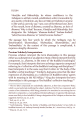
IV. Reference 1: Dhammakāya as the Tathāgata’s Designation
The first Pali reference to the term dhammakāya that is well known to all previous works is a passage in the Aggañña-sutta, wherein the term
This text discusses the term 'dhammakāya' as referenced in the Aggañña-sutta, emphasizing its importance in defining an heir of dhamma and the Tathāgata’s true son. The conversation between the Buddha
38
Understanding the Concept of Dhammakāya in Buddhist Thought
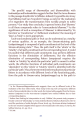
D.III.84
Vāsettha and Bhāradvāja, he whose confidence in the
Tathāgata is settled, rooted, established, solid, irremovable by
any ascetic or brahmin, any deva or Māra or Brahmā or anyone
in the world
In this passage, Vāsettha and Bhāradvāja discuss the unwavering confidence in the Tathāgata, stating that those deeply rooted in dhamma can claim to be heirs of dhamma. The term 'dhammakāya' and its i
59
Understanding Dhamma and Nibbāna
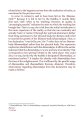
The parallel usage of dhammakāya and dhammabhūta with brahmakāya and brahmmabhūta suggests further that the term dhamma in the passage should refer to Nibbāna. Indeed, it is possible also to say that
This study delves into the concepts of dhamma and Nibbāna, positing that dhamma refers to transcendental dhamma, which serves as a transformer and defilement eradicator. It explores how the realizatio
70
The Essence of Dhamma-Milk in Spiritual Growth
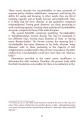
related also to the happiness arisen from the realisation of truths, as
mentioned in the previous verse.
In verse 33, Gotami is said to have been fed on the ‘dhamma-milk.’105 Because it is fed to her
The concept of dhamma-milk represents spiritual nourishment derived from the Buddha's teachings, leading to inner peace and realization of truths. Gotami's declaration signifies the transition from ph
66
Understanding Paccekabuddhas: Characteristics and Dhamma
These verses describe the Paccekabuddhas as ones possessed of supreme purity, wisdom, wakefulness, composure, and having the ability for seeing and knowing. In other words, they are full of realizing
These verses highlight the qualities of Paccekabuddhas, emphasizing their supreme purity, wisdom, and self-enlightenment capacity. The term ‘mahatadhamma’ refers to the great dhammas that relate to th